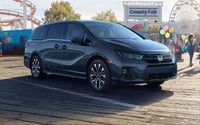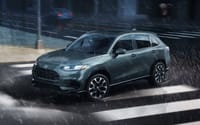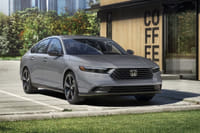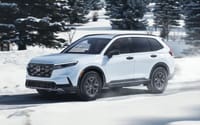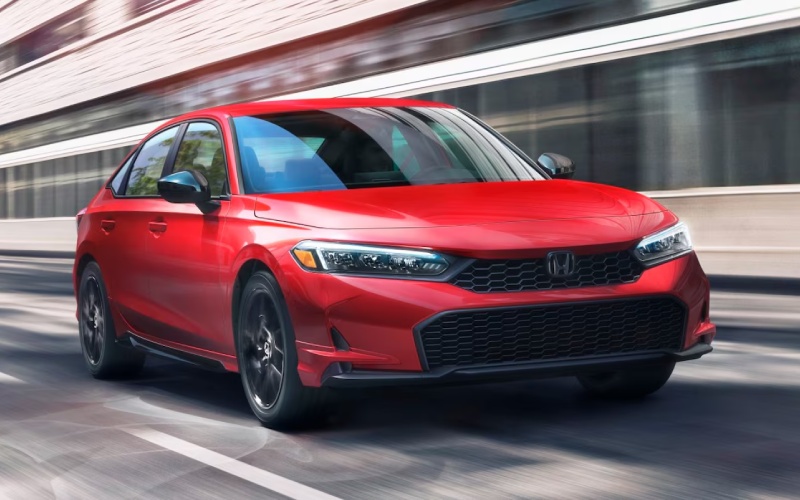
Sharp Honda - Why the 2026 Civic’s Fuel Economy Makes Daily Driving Easier in Topeka, KS
Fuel costs and time matter on Topeka roads. From I-70 runs between downtown and Wanamaker Road to steady commutes past the Kansas River and K-4, the 2026 Civic is engineered to stretch every gallon in real Midwest conditions. Strong efficiency meets a calm, planted ride that feels at home on breezy Flint Hills days and during stop-and-go near shopping, schools, and hospitals. The result is a sedan that keeps trips smooth, budgets on track, and daily life moving with fewer fuel stops.
On hybrid trims, the 2026 Civic delivers up to an EPA-estimated 50 mpg city and 47 mpg highway, pairing standout numbers with a responsive 200-hp hybrid system. Non-hybrid Civic models are rated up to an EPA-estimated 32 mpg city and 41 mpg highway, giving drivers confident efficiency across the lineup. Beyond the ratings, the Civic’s drivetrain, aerodynamics, and smart cabin tech help real-world range add up on familiar routes—whether cruising past Gage Park or merging onto I-470 for weekend drives.
- Hybrid system engineering: The available two-motor hybrid constantly balances engine power and electric assist for efficient acceleration without unnecessary revs.
- Regenerative braking with deceleration selectors: Steering wheel selectors let drivers tailor regen intensity to recapture energy in town traffic and on rolling grades.
- Drive modes: ECON and Individual modes fine-tune throttle and systems for efficiency, while Sport stays ready for passing or ramps without wasting fuel.
- Aerodynamics and weight: A low, wide stance and sculpted roofline help reduce drag on breezy days across the valley and along open I-70 stretches.
- CVT calibration: The continuously variable transmission keeps the engine in its most efficient range and smooths out small speed changes that can cost fuel.
- Rolling-resistance tires and TPMS: Efficient tires work with a tire pressure monitoring system to protect mpg and alert drivers to pressure changes.
Topeka routes highlight how thoughtfully the Civic saves fuel. Hybrid torque glides up gentle grades west of town without frequent downshifts, and steady aerodynamics help on wind-prone corridors near the river. In weekday traffic near Washburn University or along 21st Street, regenerative braking captures energy that would otherwise be lost as heat, helping sip fuel while rolling from light to light. The Civic’s composed suspension and precise steering also make it easier to maintain gentle inputs, a small habit that adds up in mpg.
Savings feel real at the pump. As a simple example, consider 12,000 miles per year and gas at $3.50 per gallon. A typical compact at 36 mpg uses about 333 gallons annually—around $1,167. A 2026 Civic Hybrid at 50 mpg uses about 240 gallons—around $840. That is roughly $325 saved each year, plus fewer detours to refuel during winter cold snaps or summer heat waves. Efficient climate controls and smart energy management help maintain comfort without heavy mpg penalties.
- Plan routes: Use available Google built-in to combine errands, check real-time traffic, and bypass peak slowdowns on Wanamaker Road and 17th Street.
- Choose modes: Select ECON for steady I-70 cruising, Sport for short bursts, and Individual to balance efficiency with preferred steering feel.
- Maintain tires: Check pressures during temperature swings and after curb hits—proper inflation protects rolling efficiency and keeps handling precise.
- Lighten the load: Clear out cargo you do not need, and install roof racks only when in use to minimize aerodynamic drag.
- Use smooth inputs: Anticipate lights on 6th Avenue, coast early, and let regen do more work so the engine does less.
Frequently Asked Questions:
What mpg can I expect from the 2026 Civic in daily Topeka driving?
Hybrid trims offer up to an EPA-estimated 50 city/47 highway mpg, while non-hybrid models reach up to 32 city/41 highway. Real-world results vary with temperature, wind, terrain, and driving style. A local test drive helps set expectations.
Does winter cold or Kansas crosswinds reduce fuel economy?
Cold starts and dense air increase demand, and gusty crosswinds raise drag at highway speeds. Preheating while plugged in when possible, keeping tires properly inflated, and using ECON mode can help stabilize mpg. Hybrid regen further offsets stop-and-go losses.
Do I need premium fuel to get the best mpg?
No. The 2026 Civic is designed to run efficiently on regular unleaded. Consistent maintenance, proper tire pressure, and smooth driving habits matter far more than octane for everyday efficiency.
Ready to see how far a tank can take you across Topeka and the surrounding highways? Visit Sharp Honda in Topeka—our team will set up a route that mirrors your commute, answer hybrid questions in detail, and map out ownership costs, proudly serving Manhattan, Fort Riley, and Junction City.