Sharp Honda - Which SUV’s AWD works better on gravel and winter roads around Junction City, KS — 2026 Honda Passport or 2026 Toyota 4Runner?
Shoppers weighing the 2026 Honda Passport against the 2026 Toyota 4Runner often ask a practical question: which one inspires more confidence on the mix of dry pavement, loose gravel, and occasional winter slush that defines life around Junction City, KS? Both SUVs are capable. The difference is how they deliver traction and control in the moments that matter, especially on the lightly crowned county roads that connect neighborhoods, parks, and trailheads across the Flint Hills.
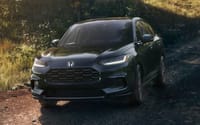
The Passport’s second-generation i-VTM4® AWD is a full-time, predictive, and torque-vectoring system. In everyday driving, it constantly monitors inputs and can send more torque not only to the rear axle but also across the rear wheels to help the vehicle rotate into a corner and track straight as you exit. That rear-axle torque vectoring is a difference you can feel when a thin layer of gravel sits on top of hardpack—steer gently and the Passport simply follows the wheel with fewer mid-corner corrections. Combine that with a unibody structure and independent rear suspension tuned for stability over sharp joints and patched asphalt, and you get a calm, connected experience that reduces driver fatigue over long stretches of K-18 and US-77.
Understanding the 4Runner’s 4WD personality
The 2026 Toyota 4Runner gives you a choice of available 4WD systems: part-time 4WD with a 2H-4H-4L transfer case, or an available full-time 4WD on certain grades. With hardware like an available locking rear differential, electronic A-TRAC, and in some trims a Stabilizer Disconnect Mechanism for added articulation, the 4Runner is formidable when you drop tire pressures and pick your way up a rocky cut. On mixed-surface county routes, however, part-time 4WD requires driver input to engage and disengage 4H as conditions change, and the body-on-frame layout paired with a solid rear axle can transmit more jiggle through the cabin over rippled washboard. For drivers who spend most of their time on pavement with occasional dirt connectors to lakes and trailheads, that traditional recipe can feel busier in the everyday commute.
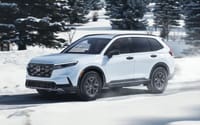
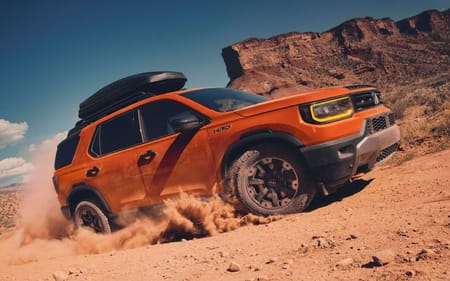
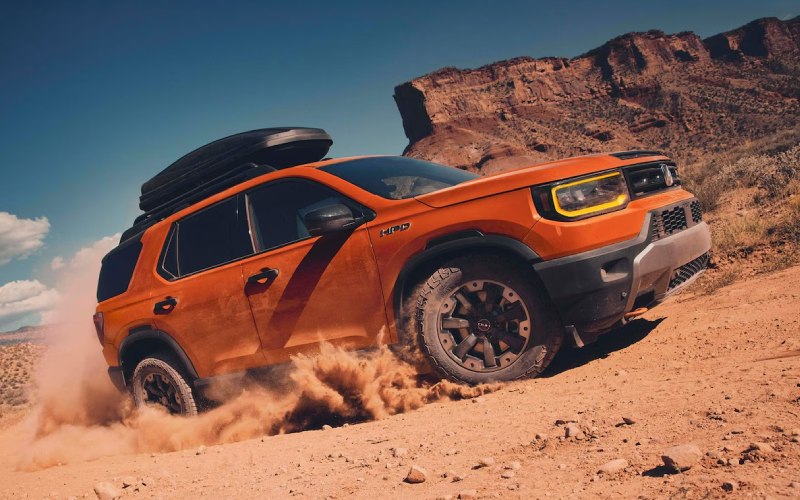
The Passport counters with Intelligent Traction Management, offering Snow, Sand, and Mud drive modes. Snow mode softens throttle tip-in and optimizes AWD mapping for low-? starts and turns, helping reduce the scrabble you sometimes feel when a dusting covers side streets. Mud and Sand modes adjust shifting and torque distribution so momentum is easier to maintain in loose surfaces, without the driver having to think through a 4WD playbook. Add available TrailWatch™ cameras, and placing a tire between ruts becomes more intuitive. The 4Runner answers with Multi-Terrain Select, Crawl Control, and an available Multi-Terrain Monitor—excellent tools when speeds are low and the climb is steep. In other words, if your weekends are all about rock gardens, the 4Runner makes a strong case; if your world blends school runs, gravel drives, and winter commutes, the Passport’s approach feels simpler and more confidence-inspiring.
Real-world grip, steering feel, and stability
On a typical Junction City run—a mix of town traffic, a 55-mph two-lane, and a few miles of maintained gravel—the Passport’s torque-vectoring i-VTM4® often feels like an invisible hand helping you hold a line. The rear outside wheel can receive more torque to nudge the vehicle through a sweeping bend, and the steering wheel stays steadier because there’s less correction needed as the surface changes. Moreover, the Passport’s independent rear suspension lets each wheel manage bumps on its own, which keeps the body more level and the tires planted. In poor weather, this stability translates to less drama when you lift off the throttle mid-corner or need to brake gently before a turn.
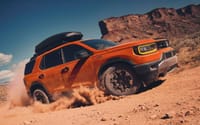
By contrast, the 4Runner’s strength appears when speeds drop and obstacles grow. With careful throttle, a driver can use 4L, a locked rear diff, and electronic aids to climb, descend, and articulate through terrain that would stop many crossovers. On gravel at typical county-road speeds, though, its truck-grade suspension and solid rear axle can introduce more vertical motion. Neither approach is wrong—it simply reflects what each SUV is built to do best.
Cabin tech that supports your drive
Technology rounds out the story. The Passport equips wireless Apple CarPlay® and Android Auto™ so navigation and music are seamless, plus available heated and ventilated front seats that keep you comfortable on long drives. Honda Sensing® comes standard, providing driver-assist confidence when the sun is low on the horizon and traffic compresses. The 4Runner brings Toyota Safety Sense™ 3.0 and, on higher grades, a large multimedia screen with impressive camera views. Both cabins offer thoughtful storage, durable materials, and easy-clean surfaces. Where the Passport pulls ahead for commuters is in the way its quiet, composed ride and torque-vectoring stability reduce the small corrections that add up over a week’s worth of driving.
Who should choose which?
If your calendar includes frequent rock-crawling trips and you love the classic feel of a ladder frame, the 4Runner’s hardware and accessories are compelling. If you want an SUV that feels reassuring on gravel and winter days yet serene and nimble Monday through Friday, the 2026 Honda Passport is a savvy pick. That is especially true if your family prefers the convenience of a Hands-Free Access Power Tailgate, the comfort of Tri-Zone Automatic Climate Control, and the confidence of an AWD system that is always thinking ahead.
- AWD philosophy: Passport’s i-VTM4® is predictive and torque-vectoring; 4Runner’s 4WD emphasizes selectable hardware and crawl-focused control.
- Everyday ride quality: Passport’s unibody and independent rear suspension feel calmer on paved and gravel roads; 4Runner’s body-on-frame is tuned for durability and articulation.
- Trail visibility: Passport’s available TrailWatch™ and 4Runner’s available Multi-Terrain Monitor both improve wheel placement; choose the interface you prefer.
Still deciding? A back-to-back test on your usual loop is the best way to feel the differences. Take a spin that includes a couple of miles of gravel and a highway merge, then note your steering corrections and how settled each SUV feels over small ripples. That quick exercise often highlights why many daily drivers gravitate toward the Passport’s planted, predictable character.
When you are ready to compare features and schedule a drive, our team is here to help—Sharp Honda is your friendly, local resource, serving Manhattan, Fort Riley, and Junction City. We will walk through i-VTM4® basics, demonstrate camera views, and help you map a route that mirrors the roads you travel most. The right AWD system is the one that makes your everyday drives feel calmer and your weekend plans more spontaneous, and for many Junction City shoppers, that points confidently to the 2026 Honda Passport.